Anonymous Friend. "Dear Fat People Nicole Arbour Original Video."YouTube. YouTube, 6 Sept. 2015. Web. 24 Sept. 2015.
Thursday, September 24, 2015

Essay 2: Argumentative Essay
Fat Shaming: A Plus Sized Issue in 21st Century America
From childhood, we as human beings are conditioned to believe that our bodies are flawed. Projected by the media consumed, fashion modeled during Fashion Week, or critics online, the message is clear: we commit the crime of imperfection simply by existing. Society shames us for this, for not fitting into the unrealistic mold cast upon us. One of the primary sources of this is body shaming, which is simply defined as “shaming someone for their particular body type”. Living in the 21st Century, anyone can be subjected to body shaming. However, the most prevalent example of body shaming is fat shaming, criticizing an individual for being overweight.
Recently, the topics of body and fat shaming have reached the attention of mainstream media because of a particular YouTube video. On September 3, video blogger and comedian Nicole Arbour released a video entitled “Dear Fat People”. In this six minute video, Arbour argues that the idea of fat shaming does not exist and was purely made up by fat people to be “the race card without race.” Her beliefs center around the ideology that she will “offend [fat people] until they lose weight”, claiming that she is concerned about the health problems that surround and affect obese individuals. The offensive nature of Arbour’s content shrouded under a veil of concern is defined by internet scholars as “concern trolling”. In Jonathan Bishop’s book, Transforming Politics and Policy in the Digital Age, concern trolls are defined as individuals who “post kudos in support of the opinion in the mainstream whilst having concerns that support their actual point of view”. In short, Arbour’s video perpetuates the idea that fat shaming negatively affects overweight individuals in America and plays no positive effect on their weight or perspective weight loss.
The main argument in Arbour’s video is that obese Americans negatively affect their health due to their size. While she denies the concept of obesity as a disease itself, she claims that her video is not targeted toward those who have specific medical conditions. However, in 2013 the American Medical Association voted to classify obesity as a disease. In response to this video, Whitney Throne, another popular online content creator, uploaded her own in which she commented, “...you can’t see a person’s health by looking at them...you cannot tell a person’s health, physical or otherwise, from looking at them.” The diseases listed by Arbour, heart disease and diabetes especially do not only affect those who are obese. The American Diabetes Association writes that while weight can be a risk factor for developing diabetes, there is no direct correlation between the two diseases. Obesity plays a similar role to that of family history or age.
Concern trolls post negative opinions that are cleverly disguised as concerned wishes. In Arbour’s case, this includes insulting fat people into feeling motivated to lose weight. She shames the body positivity hashtag, a social media movement initiated to encourage people to love their bodies regardless of body type. “If you want to be positive to your body,” she rants during the 2 and a half minute mark, “work out and eat well. Do you really think that if enough of you hashtag something bad for you, it makes it okay?” She relates this hashtag, one about accepting your body for its natural beauty, to methamphetamine and cigarette use. However, research has shown that concern trolling has no positive effect on weight loss in overweight individuals. In fact, it has been shown to cause negative damage. One study proved that “obesity stigmatization is a frequent and distressing experience that requires considerable coping effort.” (Myers) For many overweight individuals, this coping effect includes excessive eating, contributing to their weight negatively. Traci Mann and Janet Tomiyama describe it best in their paper on the subject: “If Shaming Reduced Obesity, There Would Be No Fat People”.
Nicole Arbour’s “Dear Fat People” video was more than a simple satirical routine. It was an attack on a vulnerable group of individuals who face scrutiny on a constant basis. By faking concern for these individuals, she perpetuates the fat shaming that she continuously denies throughout the video. While she has gained some support for the video, the negative outcry was so immense that the Youtube channel the video was uploaded on was temporarily shut down. The effects of fat shaming are extremely negative on overweight individuals who face a discrimination that some compare to racism. (Choices) Content such as Nicole Arbour’s “Dear Fat People” video perpetuate this negative mindset and promote the unhealthy mindset, contrary to what they may claim their intentions are.
Wednesday, September 9, 2015
"A Work in Progress" a literacy narrative
It is hard for me to pinpoint the exact moment that I fell in love with literature. For me, books have always been a constant support system, form of entertainment, and a motivational tool. One of my earliest memories revolves around the first book that I ever read by myself. The memory itself is vague, I must have been about four years old, and the only concrete detail I have about the book is that it was about a dog. Nevertheless, this book played a critical role in my development as it was the book I learned to read with. Learning how to read opened up new experiences for me, full of new worlds and exciting adventures. It allowed me to experience anything and everything, all while remaining in my safe little world. After learning how to read, books became my life. Books such as Harry Potter shaped my childhood, taught me morals, developed my character, and helped me find a community of friends who shared similar interests.
The first time I considered myself to be a good writer involved years of failure and an essay contest. In my grade school, each class hosted an essay contest revolving around the importance of Catholic schools. The winner in each grade got to read their essay during a Sunday mass and had the distinct privilege of having bragging rights for the rest of the year. In third grade, I desperately wanted to win that contest. Up until that point, I had seen my classmates win while my essays sat in the dust. That year, I wanted things to be different. I slaved away at my paper, writing draft after draft until I came up with what I believed to be the best page and a half I could create. I won the contest, solidifying in myself the idea that I could be a writer. In fact, I won every contest for the next four years. After that moment, I was seen by my teachers and peers as a writer, and a good one at that. The concept blew my mind, the idea that I could write something that could perhaps mean the world to someone in the same way that books shaped me. I felt powerful when I wrote, power to make people listen to what I had to say, feel whatever I wanted them to. For a nine year old, this feeling was exhilarating. I rarely felt control over anything in my life and here I was with the ability to obtain it.
After I discovered that I could write, I began exploring every form of writing I could. It began with poetry, which evolved into songwriting - a passion of mine to this day. It was through the online fanfiction community, however, that I truly tapped into my creative process. When I was eleven, my parents began to allow me more privileges, one of these being more time on the computer. It was at this time that I stumbled upon the fanfiction community. After finding and admiring some of the work I read, I began to post some of my own. I started a blog where I posted my fanfiction, mostly work in the Harry Potter universe. Although fanfiction has a negative connotation, I owe an enormous amount of my writing abilities to this medium. It is because of these previously established universes that I was later able to craft my own. I learned how to tell a good story, develop characterization, and proper world building techniques. I began to write my own novels and short stories using the skills I learned through fanfiction. All of these stories were posted on the blog, which became surprisingly popular considering it was hosted by a dorky preteen. The critique that I received online was extremely beneficial; the criticism helped me learn about my mistakes and how I could approve upon them. The online community I adopted played such a critical role in my life as it helped shape who I wanted to be as a writer and pushed me to find a style and voice that people wanted to read.
Over the years, my relationship with writing has dramatically changed. I don’t consider myself to be a writer anymore. While I enjoy the physical process of creating characters, building worlds, and putting a pen to the page, the writing process as a whole now terrifies me. The idea of someone reading and judging my work causes me to panic even if that person is myself. I believe this to be the case because I have always viewed writing as a way of having control, giving me the ability to find a perfection that I am not able to have in the real world. As a child, I did not view this mindset as problematic because at the earliest points in my life I thought that I was one of the greatest writers in the world. I had the childlike mindset that I could be anything that I wanted to be if I tried hard and believed in myself. I believed in myself more than anything else in the world. I had no experience, no knowledge of any writers in the literary canon, nothing to compare my own work to. However as I grew up, read more, and exposed myself to beautiful and talented writers, I began to doubt my own abilities. I taught myself to believe that I could never create worlds as beautiful as Tolkien’s or Rowling’s, characters as developed as Austen’s, prose as humorous as Shaw’s. In my mind, if I did not have the ability to write like them, I should not write at all.
I gave up writing. Of course I still wrote academic writing and articles for my high school newspaper, but mustering up the nerve to write a creative piece was nearly impossible. Without writing,a creative outlet to express myself, I developed severe anxiety and depression. Scout Finch from To Kill a Mockingbird described it best when she said, “Until I feared I’d lose it, I never loved to read. One does not love breathing.” Without writing and literature, I struggled to breathe.- find a way to relate my thoughts and emotions into something positive. It was the darkest point in my life, one where I was consumed in negative thoughts and energy, unsure of how to escape it. It wasn’t until I received help for these outside issues that I could be able to slowly reestablish myself as a writer.
My relationship with writing is awkward at the moment. It is like two people who are civil after their breakup, over the anger and betrayal felt at the beginning of the split, but not quite ready
to be incredibly close anytime soon. There are a lot of pieces that still have to be put together, things
that I have to learn about myself as a writer and my style before I feel fully comfortable with my
own work again. I still have an extreme amount of anxiety in regards to the writing process, racing
thoughts of self-doubt that attempt to pull me off course and discourage me from creating anything.
However, I have extremely good and creative days, ones where the ideas seem to pour from my
fingers and fly onto the page. On those days, I pull up an online writing forum, submit my work, and
nervously await some sort of feedback. Although it is a work in progress, I am extremely lucky to
have the literate background that I do. It was through the absence of writing and reading that I
realized just how important they are to me. I learned that those passions of mine are ones to cherish
and continue with as I continue to mature and develop my own life’s story.


Loving Literary Ladies
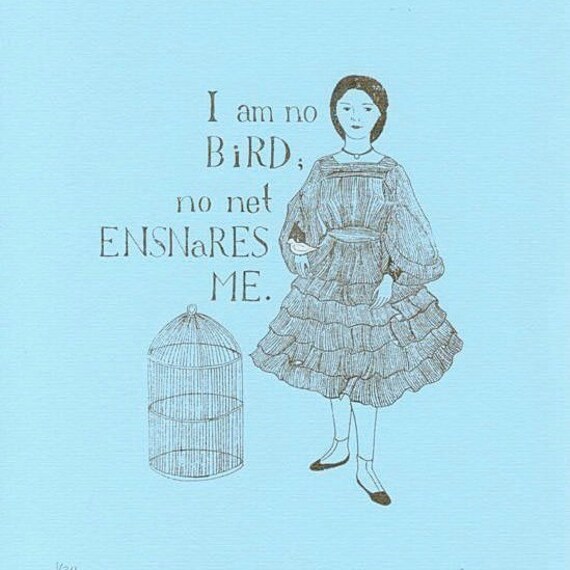
Some of my earliest and most cherished role models didn’t even exist. The literary heroines I experienced growing up played such an important role in my childhood and development. It’s no secret that the media doesn’t always love women or portray them positively. There is a lot of objectification, sexualization and degradation if you are a women in any form of media. However, I was not aware of this as a child because I was not exposed to it. Growing up, I was surrounded by intelligent, well developed women, particularly in the books I read. Two stick out in my mind: Nancy Drew and Hermione Granger.
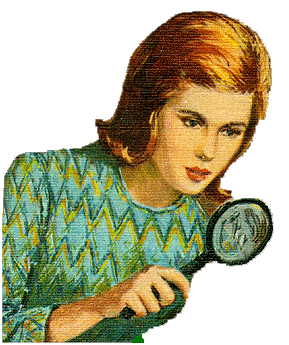
I owe a lot of Nancy Drew, as that series contained some of my first chapter books. Growing up, I thought that Nancy was the coolest chick around: she was smart, personable, strong, independent, and yet still feminine. In short, she was everything that I wanted to be as a kid, I wanted to be smart and take down the bad guys, all while maintaining an incredibly fashionable appearance.

The biggest influence in my life (besides that of my family and teachers) was without a doubt that of one Hermione Granger from the Harry Potter series. Hermione was the greatest inspiration in my life. She was flawed; she wasn’t the most attractive girl, she was a little annoying at times, but she was the most down-to-earth character I had ever read at that point in my literary journey. She set the example for how I wanted to live. Hermione was unabashedly intelligent and, despite what her classmates said or thought about her, she never tried to dumb herself down to please them. Growing up, I was teased for almost everything about myself: my older parents, my loves of school and reading to be some of the things. However, every time I wanted to give up, change something about myself to please others, I thought of Hermione. Discovering her when I did was one of the greatest things that could have ever happened to me.
Other literary ladies that deserve some love (for about the same reasons as the ones above)
 |
| Jane Eyre- My feminist babe |
 |
| Lizzy Bennet- first introduction to classic literature |
Tuesday, September 8, 2015


Prologue
Welcome to this little blog, a collection of writings, rambles, and random moments from my life. My name is Hope. I am a freshman in college, hoping to study Communication and English. This blog is a part of a project for my Honors Writing class this semester and is something that I hope to update with each project I complete, documenting the evolution of my writing throughout the year. The first project for this class is to write a literacy narrative, describing the media that played a significant role in who we are both as people and more specifically, writers. For me, this includes the importance of books and writing over the course of my life.
The second part of the project is to develop a digital component to compliment the paper. This could have been anything: a powerpoint, a podcast, anything digital. I chose to create a blog because of their importance in my life. Blogs provided a platform for me to post and share some of my earliest works. Unfortunately (or fortunately, depending on how I feel that day) this blog was deleted, along with a large majority of my earliest writings. Still, they are something that played a large part in life and literary abilities. They provided a voice, an opportunity to receive feedback from other writers who had more experience than mine. They gave some some of the best learning experiences that I could have asked for.
So that leads us here. This is the first page of what I hope to be an incredible documentation of an even more incredible college experience. I’m not sure what you can expect on this blog, probably snippets that relate to my paper. There will hopefully be pictures, scans of old writing and more that contribute to the topic. Let’s see where this goes.
Subscribe to:
Comments (Atom)